



Jellyfish drone formation represents a significant leap in Iran’s military technology. This innovative approach to drone deployment is reshaping modern warfare. By 2026, its impact is undeniable. Understanding this technology is crucial for global security analysis. It highlights a new era of asymmetric warfare tactics.
Iran has consistently pushed the boundaries of drone technology. Their focus on swarm tactics and coordinated drone attacks is particularly noteworthy. This strategy allows for overwhelming enemy defenses. It also minimizes risk to human pilots. The development of the jellyfish drone formation is a testament to this ongoing effort.
The strategic implications of such formations are vast. They challenge conventional military doctrines. Nations must now adapt to new threats. The effectiveness of these drone swarms demands a re-evaluation of defense strategies worldwide. This technological evolution is happening rapidly.
The integration of artificial intelligence enhances these formations. Drones can communicate and coordinate autonomously. This allows for complex maneuvers and adaptive strategies. The battlefield is becoming increasingly automated. This trend will only accelerate in the coming years.
The Evolution of Drone Swarms
Drone swarms are not a new concept. However, Iran’s “jellyfish” formation takes it to another level. This system deploys a large number of drones simultaneously. They operate as a single, cohesive unit. This creates a disorienting and overwhelming effect on targets.

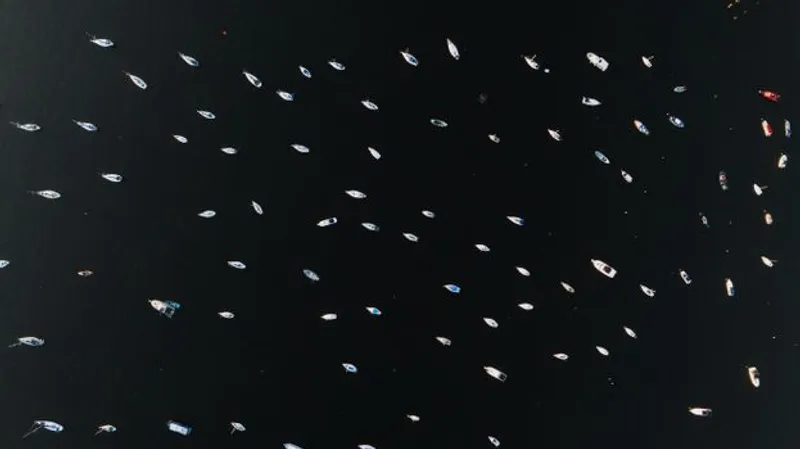
The name “jellyfish” aptly describes their movement. Drones spread out like tentacles. They then converge on their objective with precision. This unpredictable pattern makes interception difficult. It’s a sophisticated application of networked warfare.
Earlier drone operations often involved single, larger drones. These were easier to track and neutralize. The jellyfish formation presents a fundamentally different challenge. It overwhelms air defenses through sheer numbers and coordinated action. This is a paradigm shift in drone warfare.
Iran’s Drone Capabilities in 2026
By 2026, Iran’s drone program is highly advanced. They have invested heavily in research and development. Their drones are increasingly capable of complex missions. This includes reconnaissance, electronic warfare, and strike operations. The jellyfish drone formation is a prime example of this progress.

Reports suggest these formations have been tested effectively. For instance, Iran’s drone capabilities have been a concern for regional stability. Some incidents highlight their growing threat. The chilling possibility of a jellyfish drone formation Iran downs US jet scenario underscores this danger.
This advancement is not limited to Iran. Many nations are developing similar swarm technologies. However, Iran’s persistent innovation keeps them at the forefront. Their strategy focuses on asymmetric advantages. This allows them to compete with larger military powers.
Strategic Implications of the Jellyfish Formation
The strategic implications of the jellyfish drone formation are profound. It offers a cost-effective way to project power. Traditional air forces are expensive to maintain. Drones provide a more accessible alternative for many nations.

Furthermore, these formations can bypass sophisticated air defense systems. They exploit gaps in coverage and overwhelm sensors. This makes them a potent threat in contested airspace. The element of surprise is also a key advantage.
The psychological impact on adversaries is also significant. Facing an autonomous swarm can be demoralizing. It creates a sense of vulnerability and constant threat. This technology forces a rethink of battlefield dominance.
How the Jellyfish Drone Formation Works
The core of the jellyfish drone formation lies in its coordination. Each drone acts as an independent node. Yet, they are linked through a robust communication network. This network allows for real-time data sharing and decision-making.

Advanced algorithms manage the swarm’s behavior. These algorithms enable dynamic task allocation. Drones can adapt to changing battlefield conditions. They can also identify and prioritize targets autonomously. This level of automation is groundbreaking.
The formation’s flexibility is another key feature. Drones can spread out over a wide area for reconnaissance. They can then converge rapidly for an attack. This adaptability makes them suitable for various mission profiles.
Future of Drone Warfare
The future of warfare will undoubtedly involve more autonomous systems. Drone swarms like the jellyfish formation are just the beginning. We will likely see even more sophisticated AI integration. This will lead to highly intelligent and adaptable unmanned systems.
The arms race in drone technology is escalating. Nations are competing to develop the most effective systems. This includes advancements in drone speed, stealth, and payload capabilities. The battlefield is becoming increasingly complex.
Ethical considerations also surround this technology. The use of autonomous weapons raises serious questions. International discussions are ongoing regarding regulation and control. However, the development continues unabated.
Challenges and Countermeasures
Despite their effectiveness, jellyfish drone formations face challenges. Jamming and electronic countermeasures can disrupt their communication. Sophisticated radar systems can detect large swarms.
However, countermeasures are also evolving. Directed energy weapons and advanced cyber warfare capabilities are being developed. The cat-and-mouse game between offensive and defensive technologies continues. It’s a constant cycle of innovation.
Defending against these swarms requires a multi-layered approach. This includes integrated air defense systems and electronic warfare capabilities. It also demands rapid intelligence gathering and analysis. Adaptation is key to survival on the modern battlefield.
Conclusion
The jellyfish drone formation represents a significant advancement in military technology. Iran’s innovation in this area highlights the evolving nature of global conflict. As drone technology matures, its impact on warfare will only grow.
Understanding these capabilities is essential for strategic planning. The rapid development of autonomous systems demands constant vigilance. The future of warfare is here, and it is increasingly unmanned and intelligent.
For those seeking to understand these complex technologies further, expert consultation is invaluable. Reach out to Liu Purnomo for a free consultation. You can contact him via WhatsApp or email at liu@drone.co.id. Discuss how these advancements might impact your organization.