



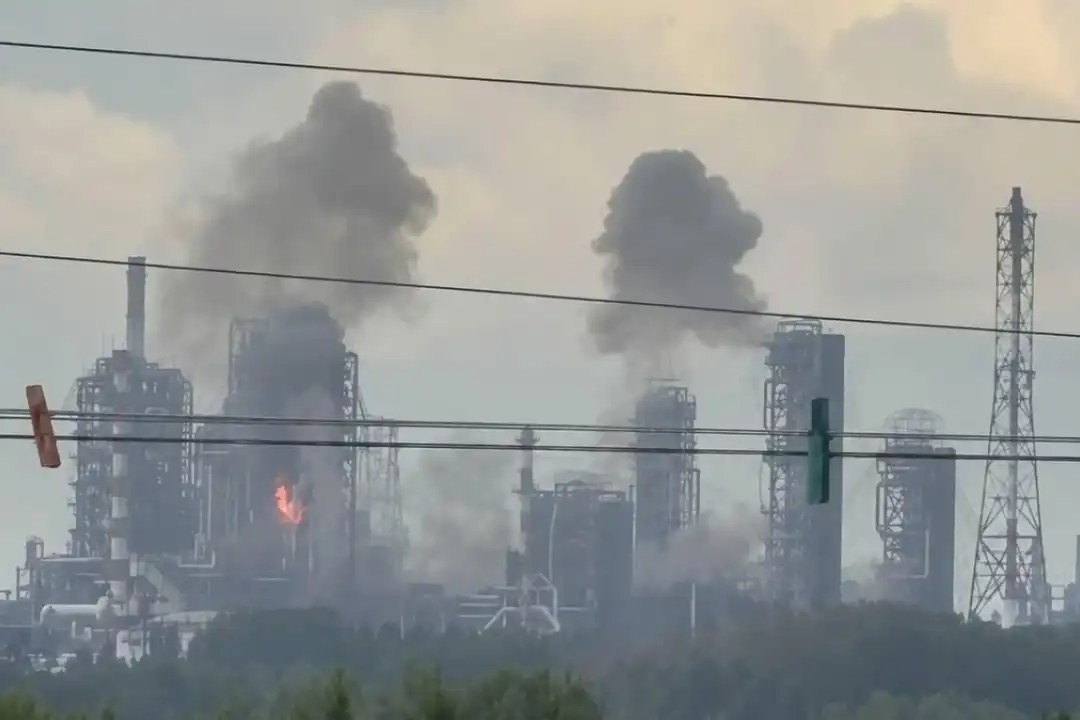
OMSK, RUSSIA – Ukrainian drones have struck Russia’s largest oil refinery in Omsk, western Siberia, forcing a halt to operations and intensifying the country’s worsening fuel shortages, according to industry sources and official statements. The attack, which occurred on Monday, marks one of Ukraine’s deepest incursions into Russian territory since the full-scale invasion began over four years ago.
The Omsk refinery, a critical facility for Russia’s fuel production, ceased selling gasoline and diesel on the St. Petersburg International Mercantile Exchange on Tuesday, data from the exchange confirmed. This disruption is expected to further strain Russia’s fuel supply, already impacted by previous Ukrainian drone attacks on energy infrastructure.
Two primary processing units, CDU-10 and CDU-11, were affected by the strike. CDU-10, responsible for approximately 38% of the plant’s production capacity with 24,580 metric tons per day, caught fire and sustained damage, Reuters reported citing industry sources. While CDU-11, accounting for another 37% of capacity (24,000 tons per day), was not directly hit, essential network links for its operation were compromised, leading to its offline status.
Anatoly Seryshev, President Vladimir Putin’s representative in Siberia, confirmed the damage to facilities at the Omsk refinery but stated that no personnel were injured. He added that restoration work was underway, though he did not specify the extent of the operational impact. Gazprom Neft, the refinery’s owner, has not yet commented publicly.
Ukrainian President Volodymyr Zelenskyy confirmed the strike, stating, “Today, our long-range sanctions reached the oil refinery in Omsk – nearly 2,500 kilometers from Ukraine.” He attributed the success to “Upgraded Fire Point drones,” highlighting Kyiv’s enhanced long-range drone capabilities. The attack underscores the evolving nature of the conflict, where FPV Drones: The Unseen Force Reshaping Global Conflict and Defense are playing an increasingly significant role.
The Omsk refinery is estimated to have a refining capacity exceeding 21 million metric tons of crude oil annually, specializing in gasoline, diesel, lubricants, and petrochemical products. In 2024, it processed around 22 million tons of oil, producing 5 million tons of gasoline and 8 million tons of diesel, according to The Moscow Times. The facility does possess two mothballed primary refining units, CDU-7 and CDU-8, each with a 10,000-ton capacity, which could theoretically be reactivated.
The strike comes as Russia faces growing frustration over fuel shortages across the country. Ukrainian drone and missile campaigns against Russian oil infrastructure have damaged roughly a third of the nation’s oil refining capacity in recent months, leading to a 25% year-on-year drop in gasoline production, as reported by The Guardian. This has resulted in lengthy queues at gas stations and public discontent, challenging the Kremlin’s efforts to shield its citizens from the war’s economic consequences.
The fuel crisis, initially observed in Russian-occupied Crimea in May, has now spread across nearly all Russian regions. The Guardian noted an incident in the Siberian town of Ust-Ordynsky, where tensions flared at a gas station due to long queues, requiring police intervention. This visible disruption to everyday life for many Russians contrasts with the official narrative of normalcy despite Western sanctions and the ongoing conflict.
The severity of the situation has prompted Russian officials to explore importing fuel from Belarus, Kazakhstan, and India, an unusual measure for a major oil-producing nation. This increasing reliance on drone warfare by Ukraine continues to impact Russia’s strategic assets and domestic stability. The incident also precedes a crucial NATO summit, where discussions on support for Ukraine’s defense capabilities are expected to be prominent.