



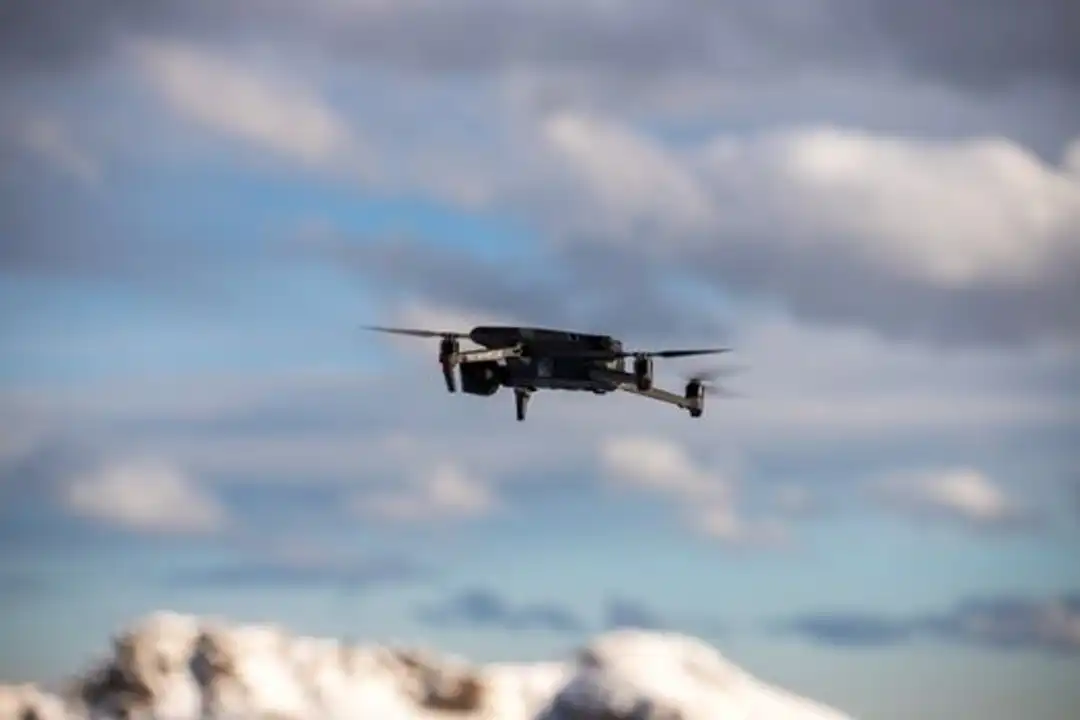
BRUSSELS – The European Union’s Artificial Intelligence Act, with a key deadline approaching on August 2 for the AI Office to oversee general-purpose AI models, is creating significant regulatory uncertainty for the drone industry, according to legal experts. The comprehensive legislation, while not explicitly detailing drone applications, introduces ambiguities around defining “AI systems” within unmanned aircraft and the scope of its military exemption.
Richard Ryan, a legal practitioner specializing in drone law, highlighted the disconnect between public perception and the Act’s actual text. Many assume the legislation directly addresses drones, particularly those with advanced capabilities. However, the Act’s broad definitions mean that even seemingly simple drone functions could fall under its purview, while highly autonomous military systems might navigate complex exemptions.
Defining Autonomy: A Regulatory Challenge
A central challenge lies in the Act’s definition of an “AI system” as one that “infers, from inputs, how to generate outputs that influence environments.” This broad phrasing captures a wide spectrum of drone capabilities. For instance, a basic consumer quadcopter maintaining position in wind employs control loops that, in earlier eras, might have been considered artificial intelligence. Conversely, a military loitering munition selecting targets would almost universally be identified as AI.
The “messy middle” includes features like obstacle avoidance, automated return-to-home, “follow me” tracking, and swarm coordination. Determining where on this spectrum a drone becomes an “AI system” under Article 3 is crucial but often overlooked in discussions, Ryan noted. Engineers frequently describe their navigation systems as “just maths,” a statement that, while technically true, also applies to the underlying mechanics of neural networks. The legal boundary, therefore, does not align with intuitive understanding.
The Nuance of Military Exemptions
The AI Act includes an exclusion for systems used “exclusively for military, defence or national security purposes.” This provision has led some in the counter-drone sector to believe they are automatically exempt, reasoning that detecting and defeating hostile UAS is inherently a security function. However, the term “exclusively” in the legal text is critical and often misinterpreted.
Ryan cautioned that this narrow wording means any dual-use application or scenario where a system is not solely for military purposes could negate the exemption. This could impact technologies used in anti-drone operations that also have civilian applications, creating a complex compliance landscape. The legal community is grappling with how this will apply to various military technology advancements.
Broader Safety Concerns for Commercial Operations
Beyond regulatory definitions, the increasing deployment of drones for commercial deliveries continues to raise safety concerns, particularly regarding operations beyond visual line-of-sight (BVLOS). A U.S. Government Accountability Office (GAO) report highlighted that over a million commercial drones were in use by the end of last year, with many flying BVLOS. This reliance on remote detection and avoidance systems presents new challenges for air traffic management.
The Federal Aviation Administration (FAA) is collaborating with private industry to enhance drone safety and integrate these new forms of air traffic into existing airspace. Technologies such as drone-mounted cameras, acoustic sensors, ground-based radar, and Automatic Dependent Surveillance-Broadcast (ADS-B) are being developed to mitigate collision risks. However, the GAO report noted that while drones can receive ADS-B information, they are generally prohibited from broadcasting their own data to prevent overwhelming the system used by manned aircraft. This one-way communication poses a significant hurdle for seamless integration into the National Airspace System.
The burgeoning commercial drone sector, including package and food delivery services, is pushing the boundaries of current regulations. Companies are collecting data from operations in areas like North Texas to inform future commercial practices. As demand for services from companies like AirData, which recently saw a surge in energy sector clients, grows, the need for clear and adaptable frameworks becomes more urgent.
The regulatory landscape for unmanned aircraft systems is evolving rapidly. While the EU AI Act aims to address the ethical and safety implications of artificial intelligence, its broad scope and specific exemptions will require careful interpretation within the diverse and fast-paced drone industry. The August deadline serves as a reminder of the increasing scrutiny on autonomous systems and their integration into society and existing legal frameworks. The development of drone swarm technology and AI in particular will require ongoing regulatory attention.