



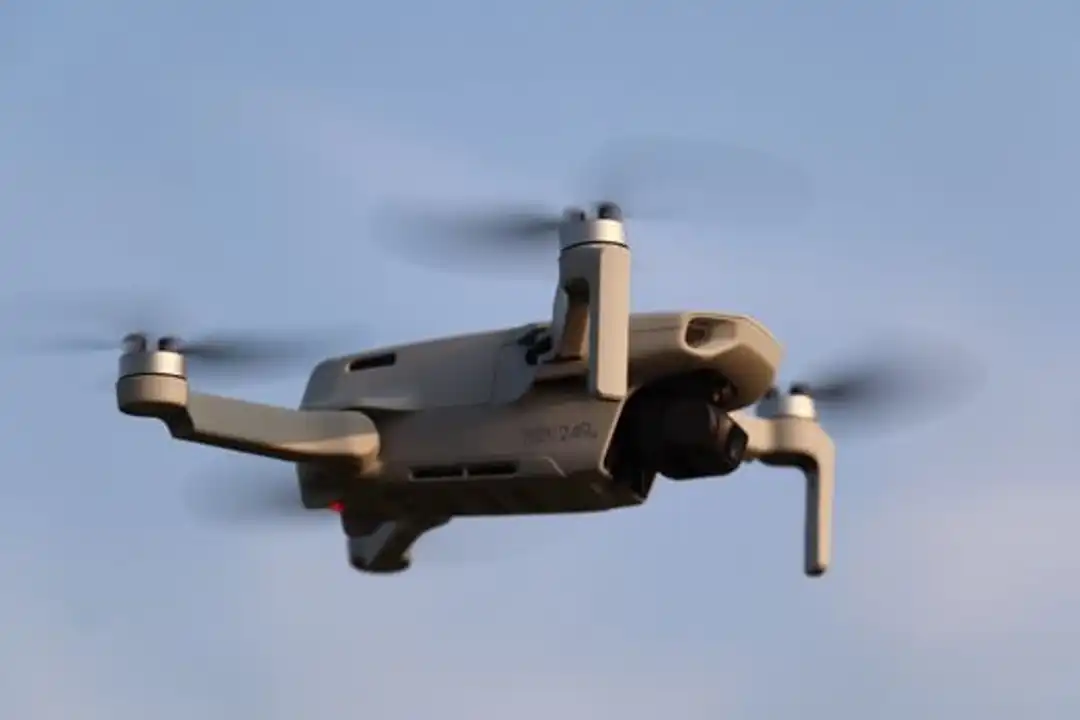
DJI’s recent launch of the Avata 360 drone signals a pivotal moment in aerial imaging, integrating 8K panoramic camera technology with its established drone platform. This new offering, which began shipping in early April to Asia and Europe, positions DJI as a key player in the nascent 360-degree drone market, previously pioneered by competitors like Insta360’s Antigravity A1. The Avata 360 promises to reshape workflows for content creators and commercial operators seeking dynamic, immersive perspectives.
The Avata 360 is equipped with two 1/1.1-inch CMOS sensors, each capturing a 180-degree field of view, combining to produce full 360-degree video at 8K resolution. This capability eliminates the need for precise in-flight framing, a significant departure from traditional drone operation. Instead, pilots can capture an entire scene and reframe shots in post-production, effectively turning a single flight into a multitude of potential camera angles. This “fix-it-in-post” approach, as described by Erik McDowell of CGMagazine, opens up creative avenues previously unattainable with conventional drones.
Shifting Paradigms in Aerial Cinematography
The emergence of the Avata 360 highlights a growing convergence between FPV (First-Person View) drone technology and high-quality cinematic capture. While FPV drones have long been popular for their fast, kinetic movements and immersive pilot experience, they often required specialized skills and historically compromised on camera quality. The Avata 360 aims to bridge this gap, offering the agility of an FPV platform with advanced imaging. Iain Anderson of ProVideo Coalition notes that FPV flying demands a distinct skillset compared to traditional drone operation, focusing on fluid movements and tight turns. The Avata 360, while not a pure FPV racing drone, leverages this immersive perspective for content creation.
This new class of drone could significantly impact sectors beyond entertainment, including real estate, tourism, and industrial inspections. Imagine flying through a hotel lobby or around a complex industrial facility, then reframing the footage to highlight specific features without repeat flights. This efficiency could be a major draw for commercial drone operators, potentially boosting demand in areas like infrastructure monitoring, where AirData’s surge in energy sector clients already indicates a maturing market for advanced aerial solutions.
Competitive Landscape and Market Positioning
DJI’s entry into the 360-degree drone space directly challenges the Antigravity A1, which launched a few months prior. While the A1 was first to market, the Avata 360 distinguishes itself with larger image sensors, more internal storage, and a surprisingly competitive price point, starting at €459 (approximately $530) for the drone alone, according to Forbes contributor Ben Sin. This aggressive pricing strategy, coupled with DJI’s established ecosystem of controllers and accessories, could quickly allow it to capture significant market share. The company’s dominance in the global drone market is well-documented, making any new product release a significant event for the industry.
However, the Avata 360’s design choices present some trade-offs. Weighing 455 grams, it requires registration with the Federal Aviation Administration (FAA) in the U.S., unlike the Antigravity A1 which just undercuts the 250-gram limit, thus avoiding registration for hobbyists. This regulatory hurdle might deter some casual users, though serious drone operators are less likely to be put off by the extra step, as noted by Mashable. The debate over Indonesia Drone Laws Navigating Aviation Rules highlights how regulatory frameworks can influence market adoption and operator experience globally.
Technical Capabilities and User Experience
From a technical standpoint, the Avata 360 boasts impressive specifications. Beyond 8K 360-degree video, it offers 6K and 4K single-lens modes, with varying frame rates up to 120fps for 2.7K capture. Transmission ranges are robust, reaching up to 20 km in low interference, unobstructed environments, and up to 0.7 km with low interference and obstructions, as detailed by ProVideo Coalition. The drone offers multiple flight modes: Cinema for controlled shots, Normal for general flying, and Sports mode for faster maneuvers, though obstacle avoidance is disabled in Sports mode, increasing risk.
The user experience is further enhanced by DJI’s ecosystem. Many existing DJI drone users already own compatible controllers, allowing them to purchase the Avata 360 as a standalone unit. For new users, higher-tier packages include motion controllers, remote controllers, and headsets, providing a comprehensive immersive flying experience. This integration of hardware and software, a hallmark of DJI products, underscores the company’s commitment to making advanced technology accessible.
The Avata 360 represents more than just a new product; it signifies a maturing of immersive aerial capture. By combining the thrill of FPV with high-resolution 360-degree imaging and the convenience of post-production reframing, DJI is setting a new standard for creative possibilities in the air. As this technology evolves, it will be interesting to observe its impact on various industries and how regulatory bodies adapt to these innovative capabilities.