



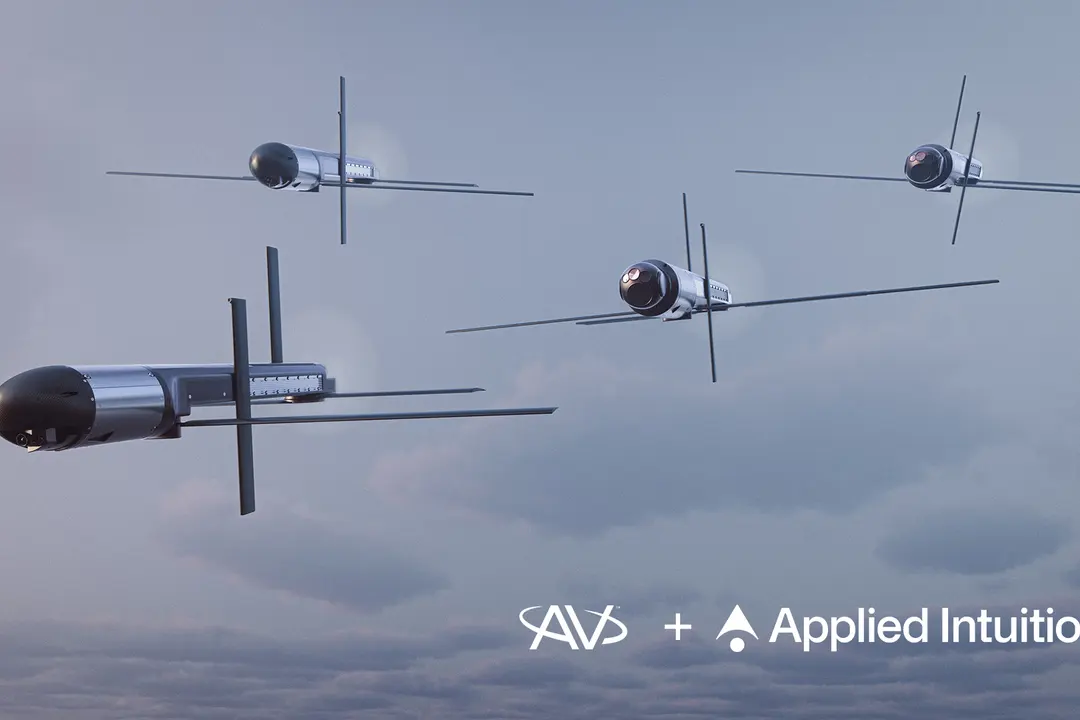
AeroVironment and Applied Intuition are partnering to enhance drone autonomy, focusing on swarming capabilities for military applications with the Mayhem 10 platform. The collaboration aims to enable teams of drones to operate autonomously under a single operator’s direction.
This strategic alliance brings together AeroVironment’s expertise in unmanned aircraft systems and Applied Intuition’s advanced software for artificial intelligence and autonomy. The initial focus of their partnership is to integrate Applied Intuition’s Acuity ISR/Strike software into AeroVironment’s new Mayhem 10 unmanned aerial system. This integration is designed to allow multiple Mayhem 10 drones to work together in complex missions.
The companies announced the collaboration, marketing it to the U.S. Army’s Launched Effects program. This initiative seeks advanced unmanned systems capable of performing a range of missions, from intelligence, surveillance, and reconnaissance (ISR) to precision strike. The Mayhem 10’s modular design is key to this adaptability, allowing for rapid integration of various payloads.
AeroVironment, known for its Switchblade loitering munitions, unveiled the Mayhem 10 earlier in 2026. The platform is designed for versatility, capable of switching between ISR, electronic warfare, communications, and precision strike roles without requiring air vehicle modification. This flexibility is a core feature that the partnership aims to leverage with advanced autonomy.
Advancing Collaborative Autonomy in Unmanned Systems
The core of this partnership lies in advancing collaborative autonomy for unmanned systems. AeroVironment’s Mayhem 10 drone is engineered with an open, modular architecture. This design choice, according to Brian Young, senior vice president of loitering munitions at AeroVironment, allows for the swift integration of diverse payloads. These payloads can range from electro-optical/infrared sensors to electronic warfare packages, communication relays, and lethal effectors.
Furthermore, the modular system is built to accommodate third-party software and autonomy solutions more readily. This approach treats new capabilities as applications, enabling faster deployment and upgrades. Applied Intuition’s contribution, the Acuity ISR/Strike software, is specifically designed to enhance these autonomous operations. It will enable teams of Mayhem 10 platforms to act in concert, forming swarms or employing “hunter-killer” tactics. Such capabilities are crucial for modern military operations, offering enhanced situational awareness and operational effectiveness.
This development aligns with a broader trend in the defense industry towards networked and autonomous systems. The ability for multiple unmanned assets to coordinate their actions significantly increases their survivability and mission success rates. As reported by DefenseScoop, the companies are specifically targeting the Army’s Launched Effects program with this collaboration. This program focuses on providing soldiers with rapidly deployable, effect-based capabilities.
Mayhem 10: A Versatile Platform for Future Missions
The Mayhem 10 represents a significant advancement in AeroVironment’s unmanned aerial system (UAS) offerings. Unveiled in April 2026, this new platform is designed from the ground up to be highly adaptable. Its key innovation is the ability to seamlessly transition between different mission sets without physical reconfiguration. This means a single Mayhem 10 air vehicle can be tasked with intelligence gathering, electronic warfare operations, or precision strikes, simply by changing its software-defined payload.
This versatility is a direct result of AeroVironment’s “All Domain Dominance” approach, which emphasizes integrated and battle-proven defense systems across land, sea, air, and space. The company’s advanced development group, MacCready Works, is dedicated to transforming bold concepts into mission-ready autonomous systems at speed. The Mayhem 10 embodies this philosophy, built with speed, modularity, and adaptability in mind. Its open architecture is a deliberate design choice to facilitate rapid integration of new technologies and third-party solutions.
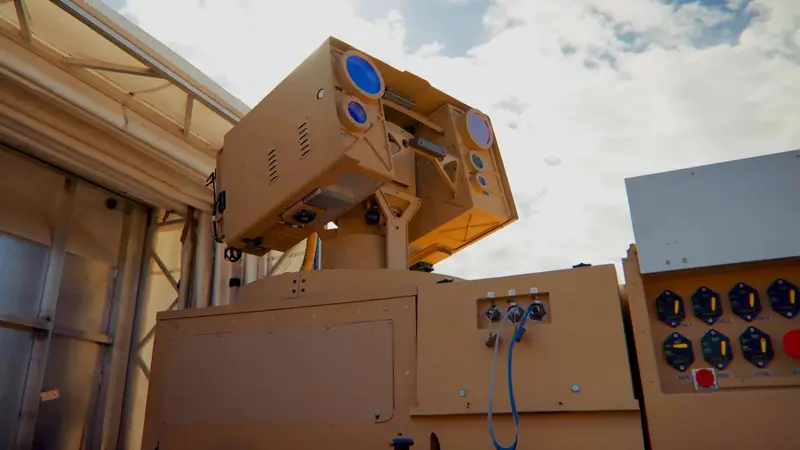
The Mayhem 10’s capacity to host various payloads, including EO/IR sensors, electronic warfare packages, and precision strike munitions, makes it a potent asset for the U.S. Army. The AeroVironment website highlights its capabilities in defense and precision strike, intelligence, surveillance, and reconnaissance, and AI, autonomy, and decision support. The integration with Applied Intuition’s software is set to unlock the platform’s full potential, particularly in coordinated, autonomous operations.
Applied Intuition’s Role in Driving Autonomy
Applied Intuition is a key player in developing simulation and testing software for autonomous systems. The company has previously demonstrated its capabilities by providing autonomy software for AEVEX Aerospace’s Atlas Group II LE unmanned aircraft system. This earlier demonstration showcased how their software could enable autonomous operations for U.S. Army launched effects. The partnership with AeroVironment marks another significant step in applying their technology to advanced military UAS.
The Acuity ISR/Strike software is central to this collaboration. It is designed to manage complex autonomous behaviors, including coordinated maneuvers for drone swarms. By integrating this software into the Mayhem 10, AeroVironment aims to enable a single operator to control multiple drones simultaneously, executing sophisticated missions. This level of autonomy is crucial for missions where human operators may be overwhelmed by the volume of data or the speed of engagement required.
As reported by Axios, this collaboration focuses on unmanned machinery and autonomy. The recent tests of the Mayhem 10 drone’s capabilities underscore the practical application of this partnership. The ability for drones to operate in swarms or “hunter-killer” teams represents a significant leap forward in unmanned warfare, promising increased operational efficiency and reduced risk to personnel. This development is particularly relevant in the context of evolving drone warfare, where autonomous capabilities are becoming increasingly critical.
Implications for Defense and Future Warfare
The alliance between AeroVironment and Applied Intuition has significant implications for the future of defense technology and warfare. The ability to deploy swarms of intelligent drones that can autonomously coordinate their actions offers a substantial tactical advantage. These swarms can overwhelm enemy defenses, conduct complex reconnaissance missions, or execute precision strikes with unprecedented speed and coordination. This advancement is a key component of what is often termed “collaborative autonomy,” a concept that promises to revolutionize military operations.
The integration of Applied Intuition’s software into AeroVironment’s Mayhem 10 platform is a concrete step towards realizing this future. It allows for the development of sophisticated mission profiles where drones can adapt to dynamic battlefield conditions, share information, and make decentralized decisions. This capability is vital in environments where communication links might be degraded or denied, as highlighted in discussions around low-altitude economy operations and the need for resilient autonomous systems.
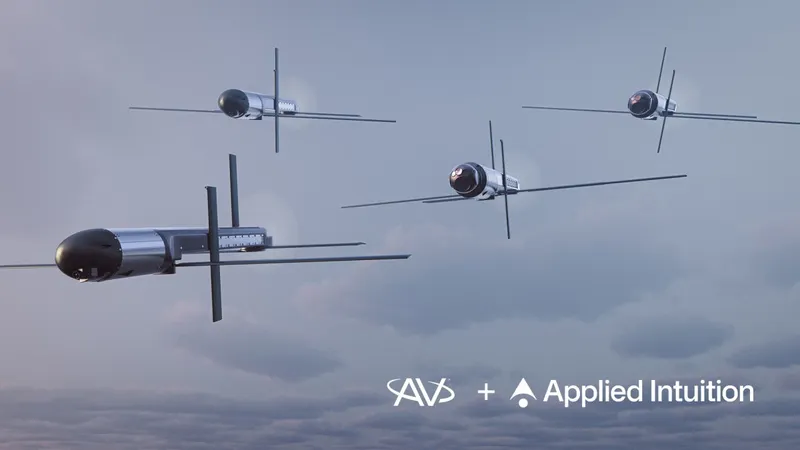
This partnership also underscores the growing importance of AI and autonomy in the defense sector. As outlined in the EU AI Act discussions, the responsible development and deployment of AI in military applications are critical. AeroVironment’s modular approach and Applied Intuition’s specialized software development aim to address these challenges, providing adaptable and controllable autonomous capabilities. The companies are positioning their collaboration to meet the evolving demands of modern military forces, particularly those seeking to enhance their unmanned systems’ operational effectiveness through advanced autonomy and networked capabilities.
This collaboration could also influence the broader low-altitude economy and its applications beyond military use. While the immediate focus is on defense, the underlying technologies for collaborative autonomy could eventually find applications in commercial sectors requiring complex, coordinated drone operations, such as disaster response or large-scale infrastructure monitoring. However, the primary driver for this partnership remains the enhancement of military capabilities, particularly in intelligence, surveillance, reconnaissance, and strike missions.