



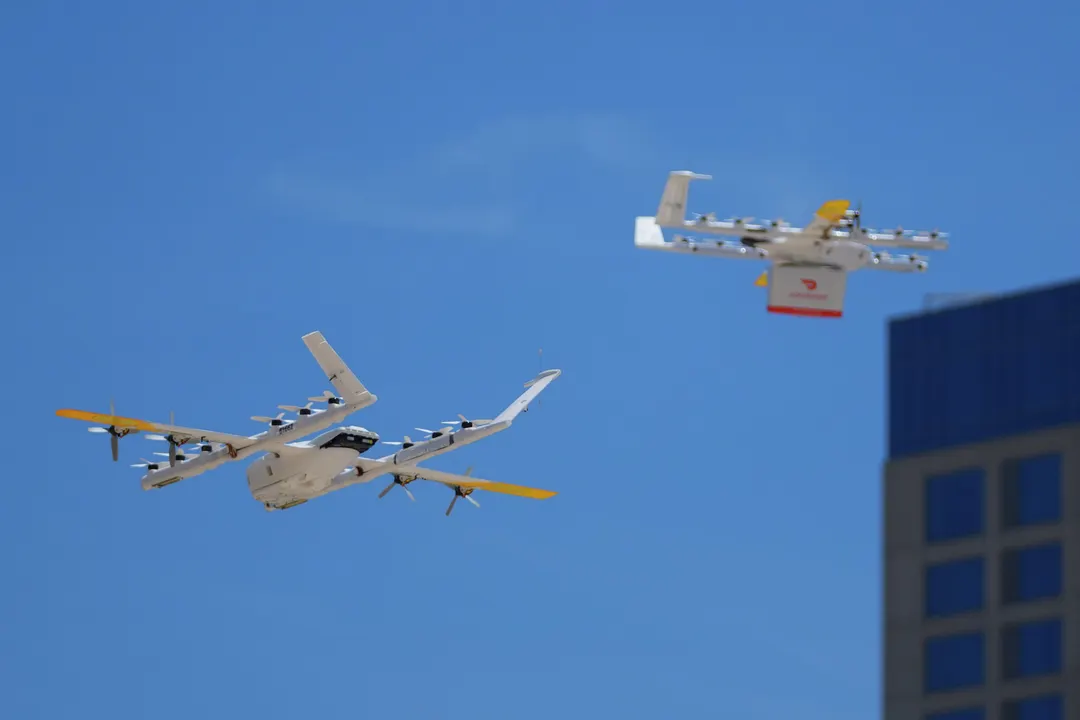
DoorDash drone delivery is set to expand following the company’s receipt of Federal Aviation Administration (FAA) approval for its own commercial drone delivery service. This significant development positions DoorDash to further integrate autonomous aerial systems into its logistics network. The approval marks a crucial step for the food delivery giant as it seeks to enhance its delivery capabilities and reach more customers. This move aligns with a broader industry trend towards utilizing drones for faster and more efficient deliveries.
The company has been actively exploring drone delivery partnerships and testing for some time. Previously, DoorDash collaborated with third-party drone operators like Flytrex and Wing. However, this new FAA authorization allows DoorDash to operate its own fleet and services. This strategic expansion into proprietary drone operations signifies a commitment to leveraging advanced technology for its core business. It also reflects the growing maturity of the drone delivery sector, which has seen increasing regulatory support and technological advancements.
The FAA’s evolving approach to drone regulation has been instrumental in enabling such commercial operations. As reported by the Los Angeles Times, the agency proposed new rules last week that aim to simplify the process for drone companies to fly beyond an operator’s visual line of sight. This is a critical enabler for longer-distance drone deliveries, expanding the potential service areas. While specific details of DoorDash’s approved operations were not immediately available, the general regulatory climate is becoming more conducive to widespread drone deployment.
The prospect of widespread drone delivery has been on the horizon for years, with initial approvals granted as early as 2019 when Alphabet’s Wing became the first company certified by the FAA for commercial drone delivery. DoorDash’s spokesperson expressed encouragement regarding these recent regulatory steps, as noted by the San Francisco Chronicle. This indicates a strategic alignment between DoorDash’s business objectives and the FAA’s regulatory framework for integrating drones into the national airspace.
Expanding Drone Delivery Capabilities
DoorDash’s new authorization is expected to significantly bolster its ability to offer rapid delivery services. Drones are capable of much higher speeds than traditional ground vehicles, allowing them to bypass traffic congestion. This efficiency is particularly valuable for time-sensitive deliveries, such as hot food or urgent supplies. The company has already seen success in pilot programs, with residents in areas like Charlotte, North Carolina, experiencing drone delivery of various food items, including sandwiches, drinks, and bowls, as detailed in a DoorDash press release.
These expansions represent a tangible step towards making drone delivery a mainstream option. The technology is no longer confined to limited test markets but is gradually being integrated into everyday consumer services. As more companies like DoorDash gain operational approval, the landscape of last-mile logistics is poised for a significant transformation. This evolution is driven by the potential for cost savings and improved customer satisfaction through faster delivery times.
Regulatory Milestones and Industry Growth
The FAA’s certification of Alphabet’s Wing in 2019 was a landmark event, paving the way for other companies to pursue similar approvals. As reported by NPR, Wing’s certification as an air carrier allowed it to begin commercial services delivering goods from local businesses to homes in the United States. This foundational approval demonstrated the feasibility of drone delivery operations under stringent safety regulations.
The current regulatory environment, with proposed rule changes aimed at facilitating beyond-visual-line-of-sight (BVLOS) operations, is crucial for scaling drone delivery. Technologies like those developed by AirData are essential for managing and monitoring these complex BVLOS flights, indicating a maturing ecosystem. The ability to fly drones over longer distances without constant human visual oversight is key to unlocking the full potential of drone delivery networks, enabling them to serve wider geographical areas and a larger customer base.
The growth in drone delivery is also influenced by broader advancements in low-altitude economy ecosystems. As the infrastructure and regulatory frameworks develop, more businesses are likely to invest in drone technology. This trend is visible across various sectors, from defense with companies like Anduril Industries exploring new production facilities, to consumer electronics with DJI continuously updating its product lines like the DJI Mini 4K and DJI Avata 360.
DoorDash’s Strategic Vision for Drones
DoorDash’s move to operate its own drone fleet is a strategic play to gain greater control over its delivery operations and innovate in the logistics space. The company has been actively testing autonomous delivery technologies, including leasing warehouse space in San Francisco for research and development of its drone delivery systems, according to the San Francisco Chronicle. This investment in R&D underscores a long-term commitment to integrating autonomous solutions into its business model.
The company’s partnerships with drone operators like Flytrex have provided valuable operational experience. For instance, DoorDash and Flytrex launched a drone delivery service in the Dallas-Fort Worth area, allowing customers to order from numerous local and national restaurants, as reported by Investing.com. These collaborations have likely informed DoorDash’s decision to pursue its own operational capabilities, allowing for more tailored service development and potentially greater cost efficiencies.
The broader impact of drone delivery extends beyond mere convenience. Companies like Zipline have highlighted that drone delivery costs can be significantly lower than traditional ground transport, potentially enabling millions of daily flights. This economic advantage, coupled with environmental benefits like reduced emissions, makes drone delivery an attractive proposition for businesses and consumers alike. As the technology matures, it could fundamentally reshape how goods are transported, especially for the 3T regions in Indonesia and similar underserved areas globally.
The Future of Logistics and Aerial Delivery
The integration of drone delivery by major players like DoorDash signifies a pivotal moment for the future of logistics. It represents a shift towards a more automated and efficient delivery infrastructure. The ongoing advancements in drone technology, from enhanced battery life to improved navigation systems, continue to push the boundaries of what is possible. Innovations in areas like Antigravity A1 drone capabilities and DJI Mavic 3 Pro camera systems contribute to a more robust aerial ecosystem.
Furthermore, the regulatory landscape is continuously adapting to accommodate these new technologies. As seen with the FAA’s proposed rules, there is a clear effort to streamline the certification process for advanced drone operations. This regulatory evolution is essential for fostering innovation and enabling companies to deploy these technologies at scale. The EU AI Act, while focused on artificial intelligence, also presents a framework that will influence the development and deployment of autonomous systems, including drones.
The increasing adoption of drones in various fields, from surveillance and defense to entertainment with drone light shows, highlights the versatility of this technology. The potential for drone delivery to revolutionize e-commerce and food service is immense, promising faster, cheaper, and more environmentally friendly delivery options. As DoorDash embarks on its own commercial drone delivery service, it joins a growing cohort of companies shaping the future of aerial logistics, contributing to the broader UAM and low-altitude economy.