



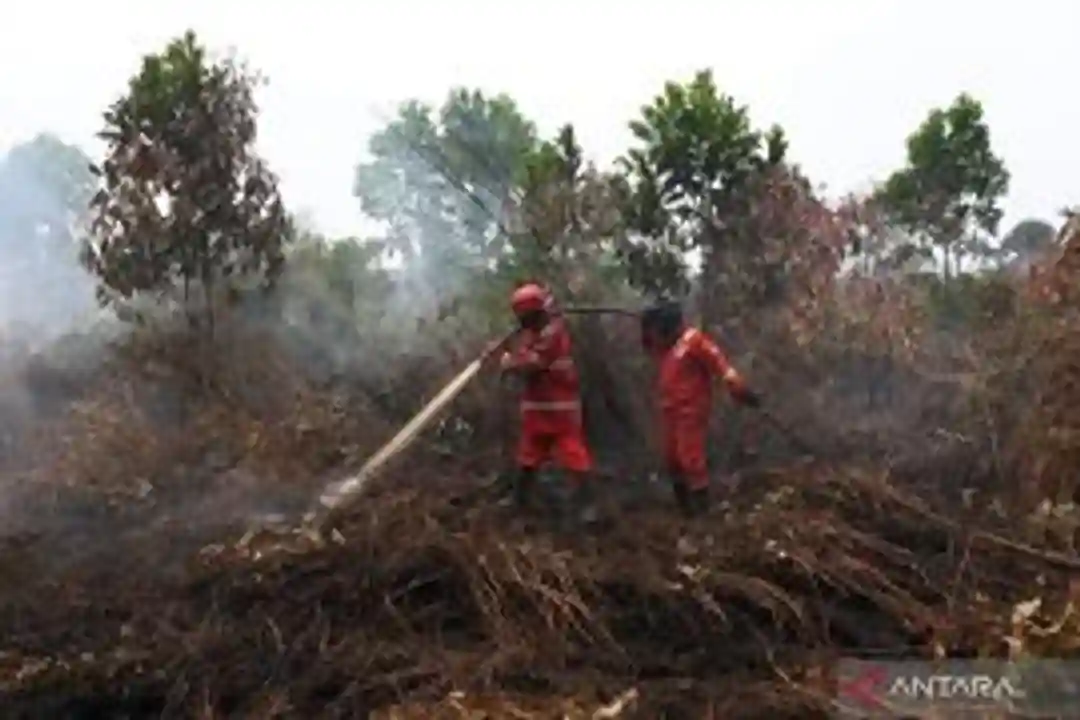
Kampar drone bombs wildfires for first time as authorities escalate efforts to combat escalating forest and land fires in Riau province. This marks a significant technological advancement in the region’s firefighting strategies. The deployment of these unmanned aerial vehicles for direct fire suppression aims to reach inaccessible areas. This initiative complements existing ground operations and aerial support.
The Riau provincial authority and various security agencies are intensifying their response. They are employing a multi-faceted approach to control the blazes. This includes the use of advanced technology and specialized personnel. The goal is to mitigate the impact of the fires on the environment and local communities. Furthermore, efforts are underway to prevent future occurrences through improved monitoring and early warning systems.
The introduction of drone technology for water bombing signifies a strategic shift. It addresses the challenges posed by difficult terrain. Traditional methods often struggle in remote or densely vegetated areas. Drones offer a more agile and precise solution. This allows for targeted water deployment directly onto hotspots. As reported by Antara News, the Riau provincial authority and other stakeholders have made progress in controlling the fires. Approximately 900 hectares remain affected out of the 16,000 hectares recorded during the January-August 2026 period.
This innovative use of drones highlights Indonesia’s commitment to leveraging technology in disaster management. It aligns with broader trends in the global low-altitude economy. The integration of such systems aims to improve efficiency and effectiveness in critical situations. The success of this operation could pave the way for wider adoption of similar technologies across the archipelago. This also raises questions about the regulatory framework for such advanced drone operations, as seen in discussions regarding Indonesia Drone Laws.
Specialized Units Mobilized for Fire Suppression
The Indonesian National Armed Forces (TNI) have deployed a specialized paratrooper unit to combat forest fires. This unit is designed to operate in remote areas of Riau that are difficult to access by ground transport. The paratroopers are trained for rapid deployment into fire zones. Their mission is to execute freefall jumps directly into targeted areas to extinguish the fires. This reflects the military’s commitment to supporting inter-agency disaster mitigation efforts.
These paratroopers are drawn from elite units under the Disaster Mitigation Quick Response Force (PRCPB). They possess specialized training for extreme terrain operations. This includes helicopter rappelling with heavy gear and the use of paramotors to reach remote locations. All personnel are equipped with specialized protective gear. As detailed by Antara News, Maj. Gen. Agus Hadi Waluyo, Commander of the XIX/Tuanku Tambusai Military District, stated that these forces are prepared for immediate deployment.
In addition to the TNI, the Riau Provincial Police Mobile Brigade (Brimob) is actively involved. Their personnel are utilizing portable breathing apparatus to protect themselves from thick smoke. This equipment is crucial for operations on peatlands and in areas with high fire exposure. The Mobile Brigade Unit Commander of Riau Provincial Police Headquarters, Kombes I Ketut Gede Adi Wibawa, confirmed that 40 sets of breathing apparatus were prepared. This ensures personnel safety during critical fire-fighting and suppression tasks. This emphasis on personnel safety underscores the dangerous nature of these operations, similar to concerns raised in discussions about EU AI Act and drone safety.
Technological Advancements in Firefighting
The deployment of drone bombs for water delivery represents a significant technological leap in combating wildfires. These drones are equipped to carry and release water payloads directly onto fire hotspots. This capability is particularly valuable in areas inaccessible to traditional firefighting vehicles or ground crews. The precision offered by drones allows for a more efficient use of water resources. It also minimizes risks to human personnel by enabling remote operations.
The use of such advanced systems aligns with the growing integration of unmanned aerial vehicles (UAVs) across various sectors. In defense, FPV drones are reshaping modern warfare, and in civilian applications, they are being explored for delivery services, surveillance, and emergency response. The specific application of drone bombs in Kampar demonstrates a tailored solution to a pressing environmental challenge. This innovation could influence future strategies for wildfire management not only in Indonesia but globally.
Furthermore, the Riau Provincial Police Mobile Brigade’s use of breathing apparatus highlights the critical need for protective equipment. As reported by Metro TV News, Kombes I Ketut Gede Adi Wibawa emphasized the importance of respiratory protection for personnel working in dense smoke conditions. This measure is vital for maintaining operational effectiveness and preventing health hazards associated with smoke inhalation, especially when battling fires on peatland.
Challenges and Public Advisory
Despite the technological advancements, challenges remain in effectively combating widespread wildfires. The scale and intensity of these fires often overwhelm available resources. Remote locations and challenging weather conditions further complicate suppression efforts. The Indonesian government continues to prioritize forest and land fire management across six provinces, including Riau. This underscores the persistent nature of the problem.
In light of these ongoing operations, the Regional Disaster Management Agency (BPBD) of Kampar has issued advisories to the public. They are urging residents not to fly drones in the vicinity of fire locations. This is to prevent interference with ongoing water bombing operations. As noted in social media posts from nowdots and their Facebook page, the prohibition is in effect during water bombing operations. This measure is crucial to ensure the safety and efficiency of aerial firefighting efforts. It also prevents potential accidents or disruptions caused by unauthorized drone activity. Such advisories are becoming increasingly common as drone usage grows, mirroring situations like the World Cup drone seizures.
The cooperation of the public is essential for the success of these large-scale operations. Adhering to advisories regarding drone usage near fire sites helps emergency responders focus on their critical tasks. The overall strategy involves a combination of advanced technology, specialized personnel, and community awareness. This integrated approach is vital for managing and mitigating the devastating effects of forest and land fires in regions like Kampar. The situation also brings to mind the complexities of drone operations, such as those discussed in relation to Terra Drone Indonesia’s CEO conviction, highlighting the need for strict operational protocols.
Future Implications and Broader Context
The deployment of drone bombs in Kampar is a watershed moment for wildfire management in Indonesia. It signals a commitment to embracing cutting-edge technology to address environmental crises. This initiative could serve as a model for other regions facing similar challenges. The successful integration of drones into firefighting operations can lead to more effective and efficient responses in the future. This aligns with the development of the UAM and low-altitude economy in Indonesia.
The broader context of drone warfare and civilian applications is rapidly evolving. From military applications like those seen in Ukraine’s drone assaults to commercial uses like delivery services, drones are transforming various industries. The use of drones for disaster response, as seen in Kampar, showcases their versatility and potential to save lives and protect property. This advancement also places Indonesia at the forefront of adopting such technologies, potentially boosting its domestic drone industry and related sectors, as discussed in forums like the Hubei International Technology Exchange Conference where Indonesian leaders participate.
Ultimately, the Kampar wildfires underscore the ongoing need for robust disaster preparedness and response mechanisms. The integration of drone technology, alongside the bravery of military and police personnel, represents a significant step forward. However, sustained efforts in fire prevention, land management, and inter-agency coordination are equally crucial. As Indonesia continues to navigate the complexities of its environment and technological landscape, innovations like drone water bombing will play an increasingly vital role. This aligns with the country’s push for advancements in its drone training and maintenance facilities and the establishment of a strong airspace management framework to support its growing drone ecosystem.